Infographic: Sources of nutrient pollution in water

There are many sources of nutrient pollution in water. Scientists are interested in the nutrients that are related to people living in the coastal zone because human-related inputs are much greater than natural inputs. As there are more people living in coastal areas, there are more nutrients entering our coastal waters from wastewater treatment facilities, runoff from land in urban areas during rains, and from farming.
[simpleazon-image align=”left” asin=”B003XELTTG” locale=”us” height=”79″ src=”http://ecx.images-amazon.com/images/I/513J6pq9A2L._SL110_.jpg” width=”110″]
[simpleazon-link asin=”B003XELTTG” locale=”us”]iSpring 75GPD 5-Stage Reverse Osmosis Water Filter System[/simpleazon-link]

Nutrient Pollution in water

Explore more visuals like this one on the web’s largest information design community – Visually.

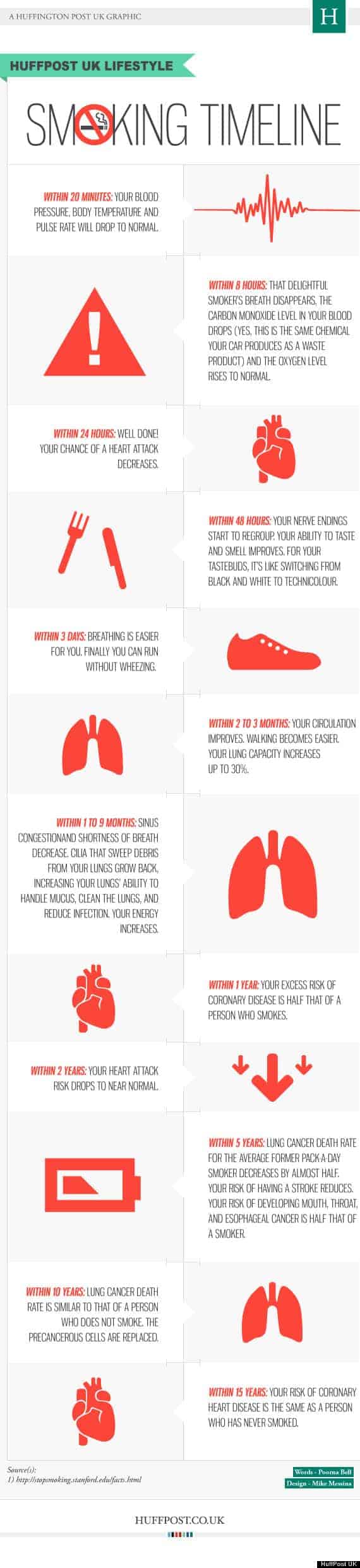
Smoking Timeline [Infographic]

To quit smoking cigarettes may seem like a simple goal for some people, but as many smokers know (myself included), it’s easy enough to talk about quitting cigarettes, but actually doing so can be much more difficult. I’ve tried unsuccessfully to quit more than once, and while I know that quitting for good might be rough, it will be worth it. It may take a few hard weeks to fully kick the habit, but once it’s done the health benefits are completely worth the struggle (and that’s what’s most important, right?).

Today’s infographic gives us a look at both the short term and long term benefits of putting down cigarettes permanently. Benefits start kicking in as early as 20 minutes, with blood pressure, body temperature and pulse rates going back to normal. A few more months down the line and you’re starting to breathe easier and don’t get winded as often during physical activity. That’s just the beginning, too: risk of deadly disease drops significantly after a few short years of non-smoking, and that’s something worth considering.

For more info on some of many good reasons to quit smoking, have a look at the infographic below. [Via]


© Grayson for Daily Infographic, 2013. |
Permalink |
No comment |

Post tags: cigarette smoke, cigarette smoke infographic, cigarettes, cigarettes infographic, health benefits of stopping smoking, health benefits of stopping smoking infographic, health benefits smoking cessation, health benefits smoking cessation infographic, quitting smoking, quitting smoking infographic, smoke, smoke infographic, smoking, smoking cessation, smoking cessation infographic, smoking infographic, smoking side effects, smoking side effects infographic, stop smoking, stop smoking cigarettes, stop smoking cigarettes infographic, stop smoking infographic

Youth Sports Injuries [infographic]

Alas, football season is upon us, and if you live in Texas, you know high school football is just as popular as the NFL. Young boys in Texas are practically pre-destined to play this impact sport. Some are destined for greatness (Johnny Football anyone?), while others have their go in middle school and slowly fail out of the sport. However, as sports continue to increase in aggressiveness, children are continuing to risk their health for it.

My cousin for example, is a tall, lanky, 12 year old, who is having his first try at 7th grade football. He was giving it his all: refusing to miss practice, practicing at home–then, BAM!–some massive child took a cheap sack at him, which resulted in a torn meniscus.  Poor kid, a torn meniscus at 12 years old. Are competitive sports really worth it when young children are subject to such serious injury? Today’s infographic gives some stats on youth sports injuries and how your child can avoid them. Check it out to see what sports have the most injuries, and to learn some preventative practices to keep your child injury free! [via]


© Jasmin for Daily Infographic, 2013. |
Permalink |
One comment |

Post tags: children, fitness, football, health, injuries, insurance, medicine, physical, prevention, sports, Youth

Brain Boosters and Brain Busters [infographic]

“Hey I’m getting Chinese, do you want anything?”

Normally I would say “Heck yeah! Get me some of that General Tso chicken!”

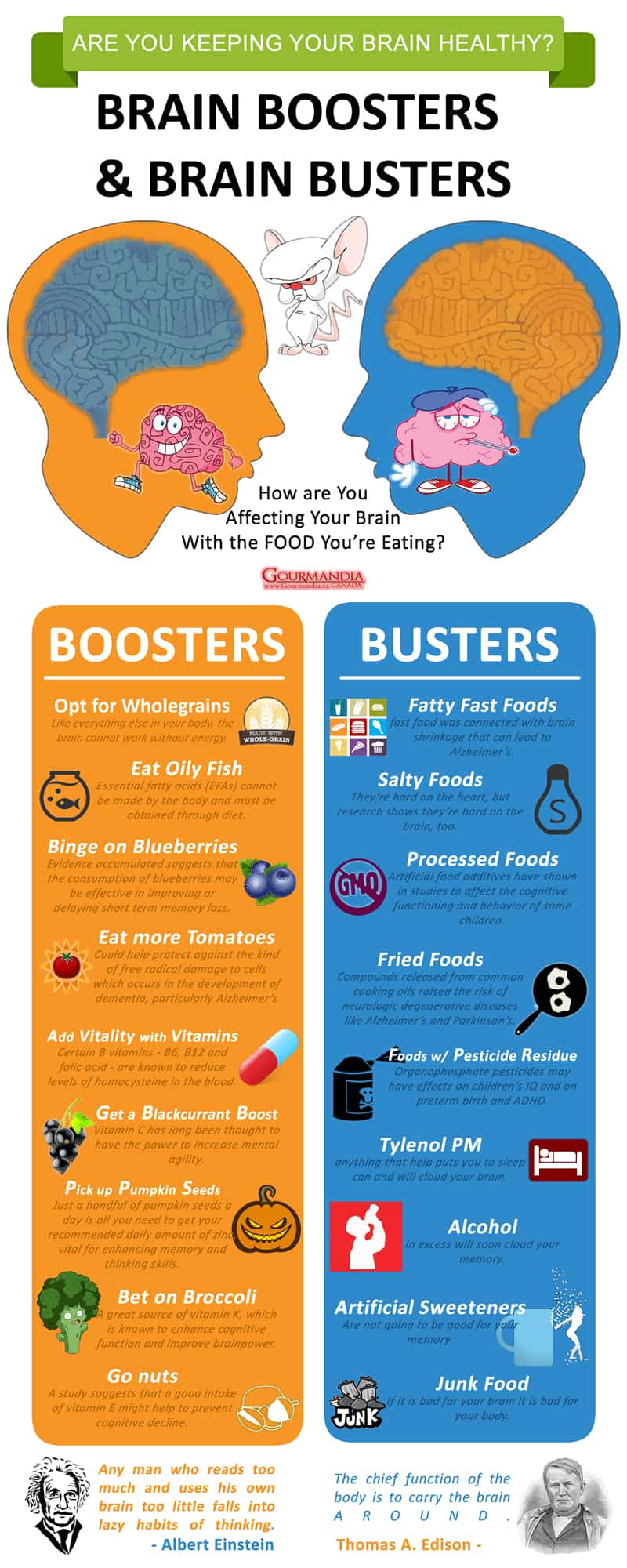
Eating junky food is so easy. Not to mention it tastes awesome. So often it is much easier for time’s sake to get something unhealthy than it is to get something healthy. Many believe that as long as you look fit and healthy it means that you actually are. But that is a farce. What good is looking fit if your brain isn’t getting the proper nutrients?

Eating right can be easy! All you need is to be informed. The following infograph will show you simple foods you can eat to keep your mind bright and functioning and how you can even avoid the illnesses that can often come with age.

Stay away from the salty foods! Not only are they bad for your brain, they’re bad for your heart. Stop with the fast food. If it helps, carry a backpack with healthy snacks. Plan ahead! Eating healthy doesn’t need to be expensive. Stores have deals on fish and fruits all the time. Even nuts sometimes.

The important thing is that you are aware of how the food you consume will affect you in the long run. If looking fit turns people on, shouldn’t a brain with a healthy dose of all the essentials be sexy too? [via]

brain-boosters-and-brain-busters_523ac6280e90f


© J.P. Blackard for Daily Infographic, 2013. |
Permalink |
2 comments |

Post tags: Brain, Diet, food, functioning, Healthy, illness, nutrients, plan, sexy, unhealthy

1 4 5 6